The House «zum Kropf»

in the course of time

From the mayor’s quarters to spice shop

The history of the stately house at In Gassen 16 reaches back to the Middle Ages. First mention of the house name “zum Kropf” was in 1444.

The house “zum Kropf” was a private residence until the end of the nineteenth century. Its prime location made it a favorite place to live among distinguished families and citizens. Until 1462 it belonged to the city gunsmith, Lienhart. At the end of the eighteenth century, the house was occupied by the mayor himself, Johann Heinrich Kilchsperger (1785–1798).

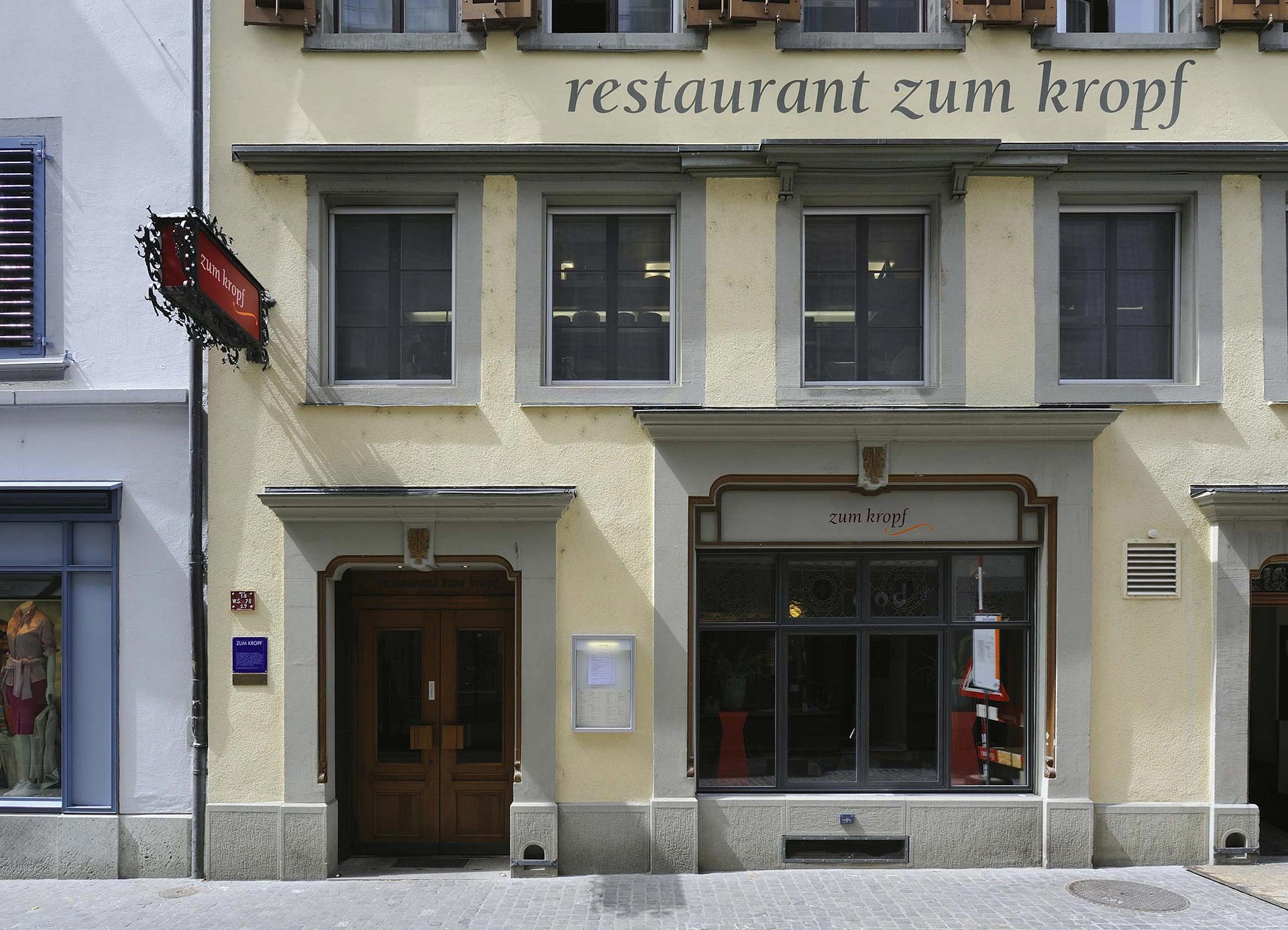
In 1881, Dr. Johann Schmid’s widow commissioned the then famous architects Alfred Chiodera and Theophil Tschudi to build a shop with a new façade on the ground floor. The main entrance in the middle was moved to the right side; on the left, a matching gate was constructed as a copy of the original, and the middle was outfitted with a large display window. The same façade design can still be seen today. The first to lease the store was the spice trader Anna Müller-Flach.

A beer hall like the ones in Munich

In 1887, the architect Friedrich Kronauer bought the house. He had a building permit for a restaurant and a beer hall, and sold the property in 1888 to the restauranteur Heinrich Toggweiler-Kölliker. Through the addition on the back and the reconstruction of the ground floor, a three-part restaurant emerged, which still stands today.

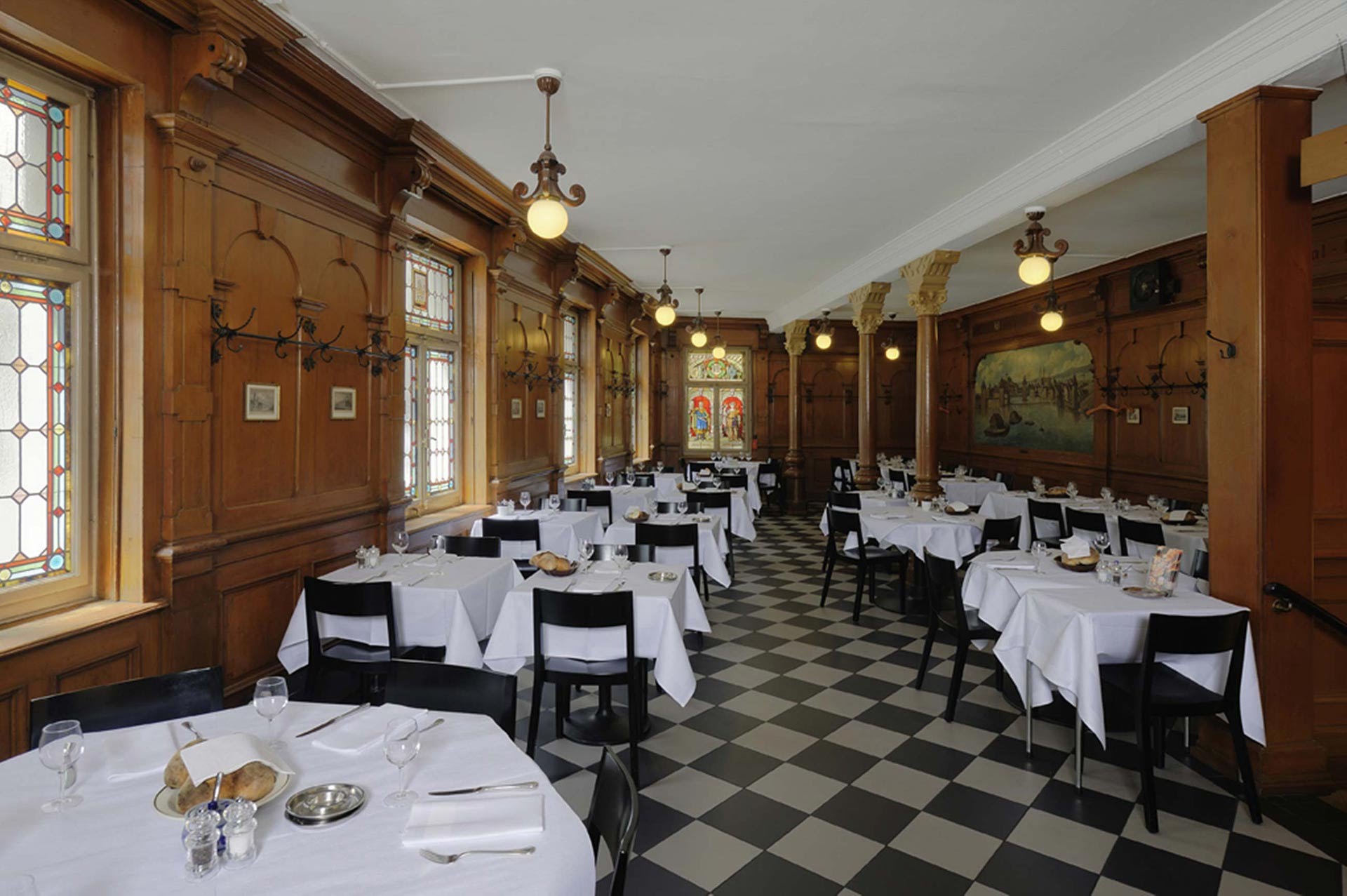
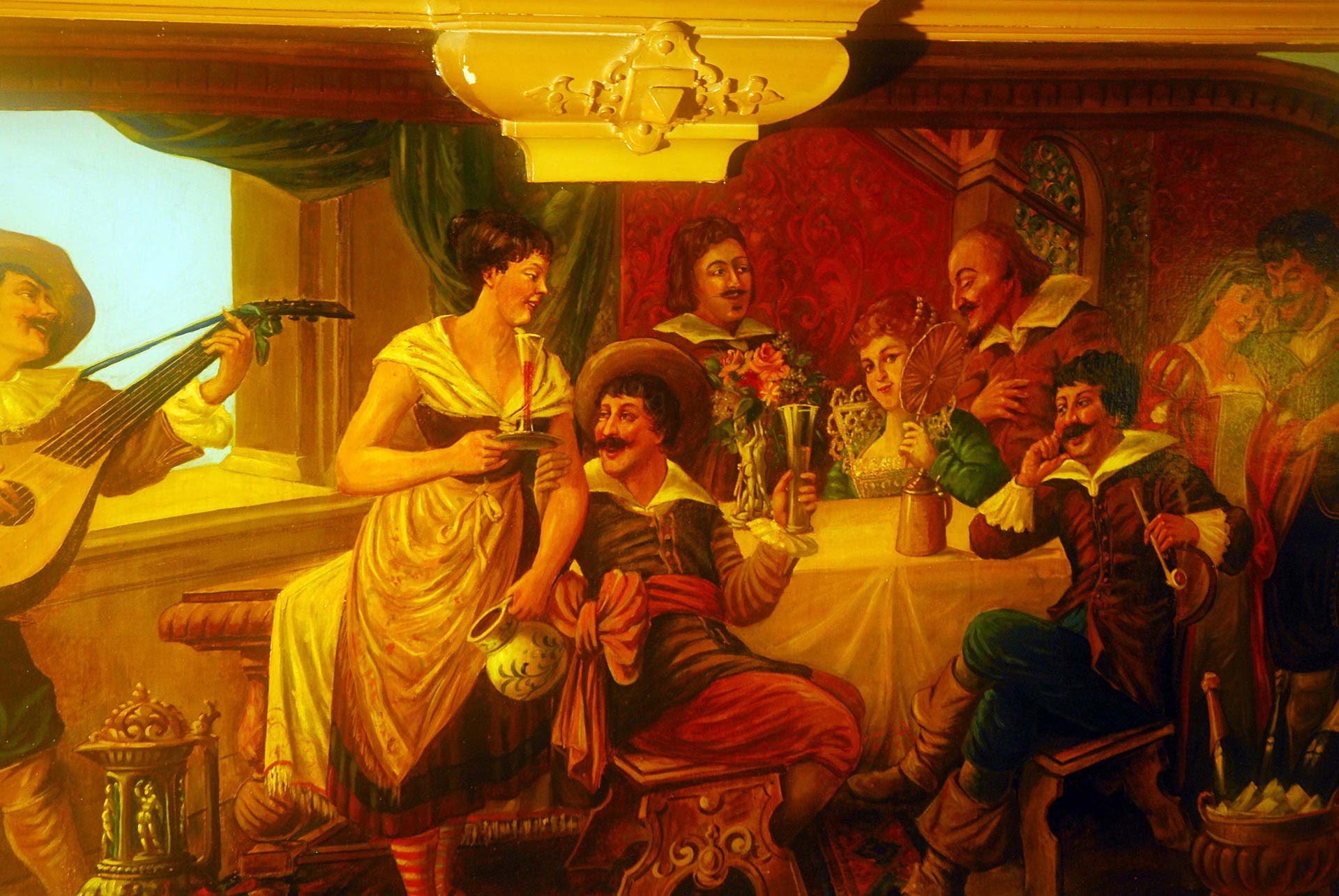
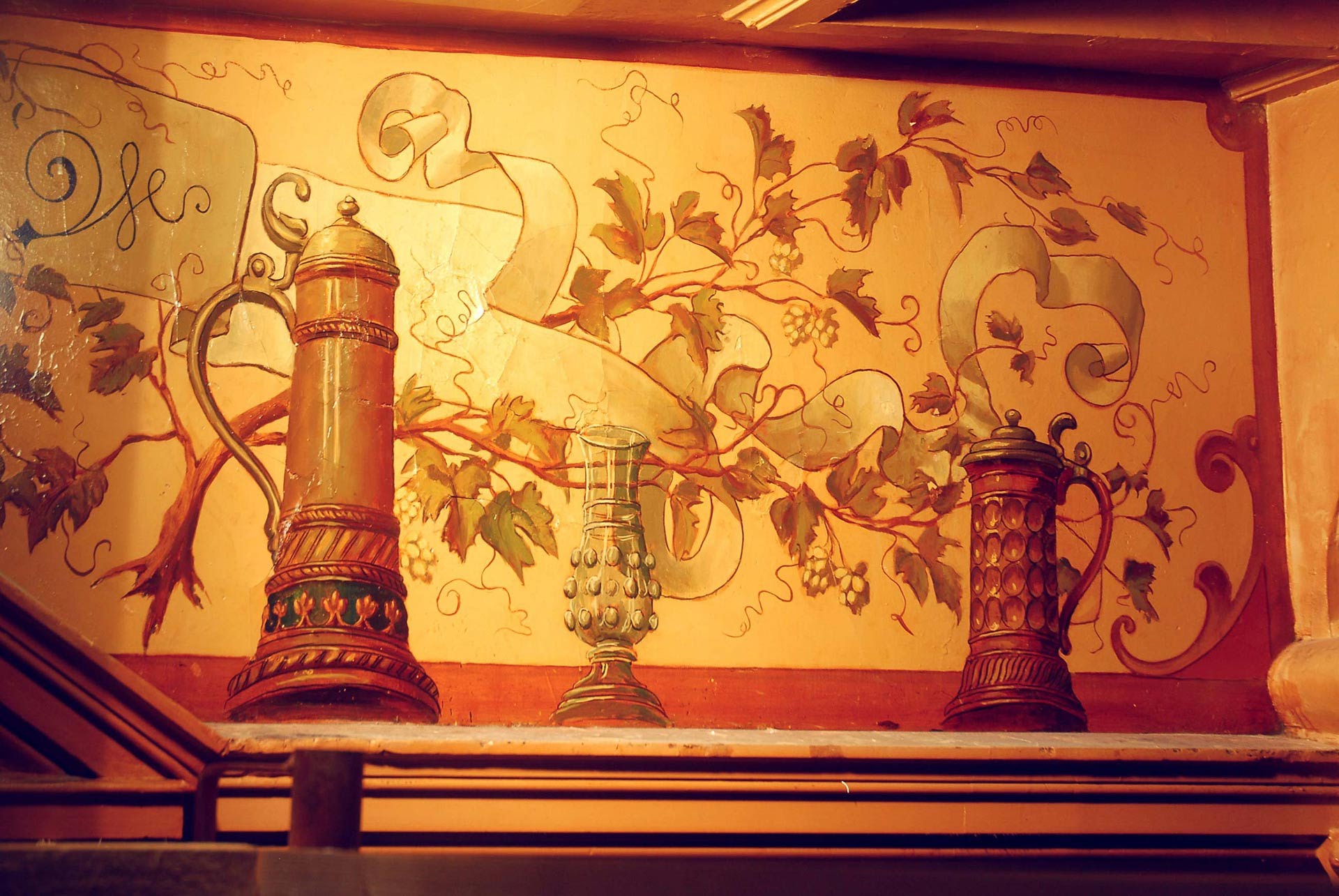
In the lower area, the so-called “Bärengraben” (bear pit), accessible from the In Gassen street entry, the guest is met by an oil painting of a rustic drinking scene surrounded by finely arranged paneling. The beer hall is the restaurant’s showpiece. At the center is a powerful “Corinthian” pillar, plastered in stucco marble. The wall paneling is broken by two large mirrors with lavish baroque frames. Stretching across them is a fresco depicting cheerful cherubs, singing frogs, musical monkeys, and lively drinking buddies. The vault is ornamented with Hermes figures and “culinary emblems”– a cornucopia of vegetables, crabs, and tortoises – indicating a rich banquet of food. A stained glass window integrated in the halls’ painted stucco ceiling is characteristic for interiors of the epoch. The rear hall is designed in a simpler fashion, attaining its rhythmic structure from three wood pillars.

Bavarian beer hall baroque

The paintings at Kropf are the only surviving works of the talented Polish ornamental painter Alexander J. Soldenhoff (1849–1929). Ornamental painting was a highly regarded handicraft at the time and was accordingly cared for. Marbling and maceration – the imitation of marble and various wood sorts – was in its heyday. In the depiction of the figures, a baroque fashion was preferred. A very unique style merged for restaurants, which is known today as “Bavarian beer hall baroque.” From a cultural history standpoint it is just as significant as the furnishings of the 1920s dance cafés or the Swiss “Heimatstil” of the 1940s.

However, like all fashion trends, this decorative art rooted in historicism did not hold very long and was subsequently replaced by the more international Jugendstil. With the exception of the marble façade on the house at Storchen-gasse 13, all original evidence of the façade painting has disappeared. Kropf and Zurich’s opera house have the only original interiors from this period that are accessible to the public.

Yet not merely the interior of the restaurant should exude Bavarian flair, but also the beer and waiting staff. Toggweiler-Kölliker personally chose the Munich beers he imported from the Bavaria’s capital city, and also the original “Münchner Kindel” (waitresses). On so-called “Bock” nights, events were meant to be particularly Bavarian: in the decorated restaurant, an orchestra stuck up the beat, while the waitresses dressed in traditional dirndls served guests who donned Bavarian hats.

Restaurant zum Kropf in the Twentieth Century

In 1909, the new owners, the Hackerbräu München, once again commissioned improvements: a beer and wine lift were built in, the water heating was replaced, and the electrical lighting was installed. More extensive changes were made in 1914: walls and ceiling were renovated and in the rear restaurant, two new murals were added, which are still present today: The city as seen from the lake in the sixteenth century and The Fröschengraben with Rennwegtor, the Haus zur Trülle and the Käuffelerturm. (By the way, the filled-in Fröschengraben – frog’s moat – can be found under today’s Bahnhofstrasse.)

In 1919, innkeeper and Munich native Andreas Sellmayr purchased the restaurant, which he ran until after World War II. His Hungarian and Bavarian specialties lay the foundations for its legendary status. After a few unglamorous years, in 1962 innkeeper Jakob Brütsch-Sprecher rejoined with the old tradition and brought the original significance back to the old Bavarian beer hall.

Historical monument protection

In 1975, the three restoration rooms and the façade were designated protected historical monuments. This was a consideration during reconstruction undertaken in the early 1980s in which the operational spaces were restored. Five contemporary apartments were built on the upper floors, which had formerly housed the staff quarters. One room on the second floor, paneled with walnut wood in the eighteenth century, had to be dismantled for operational reasons.

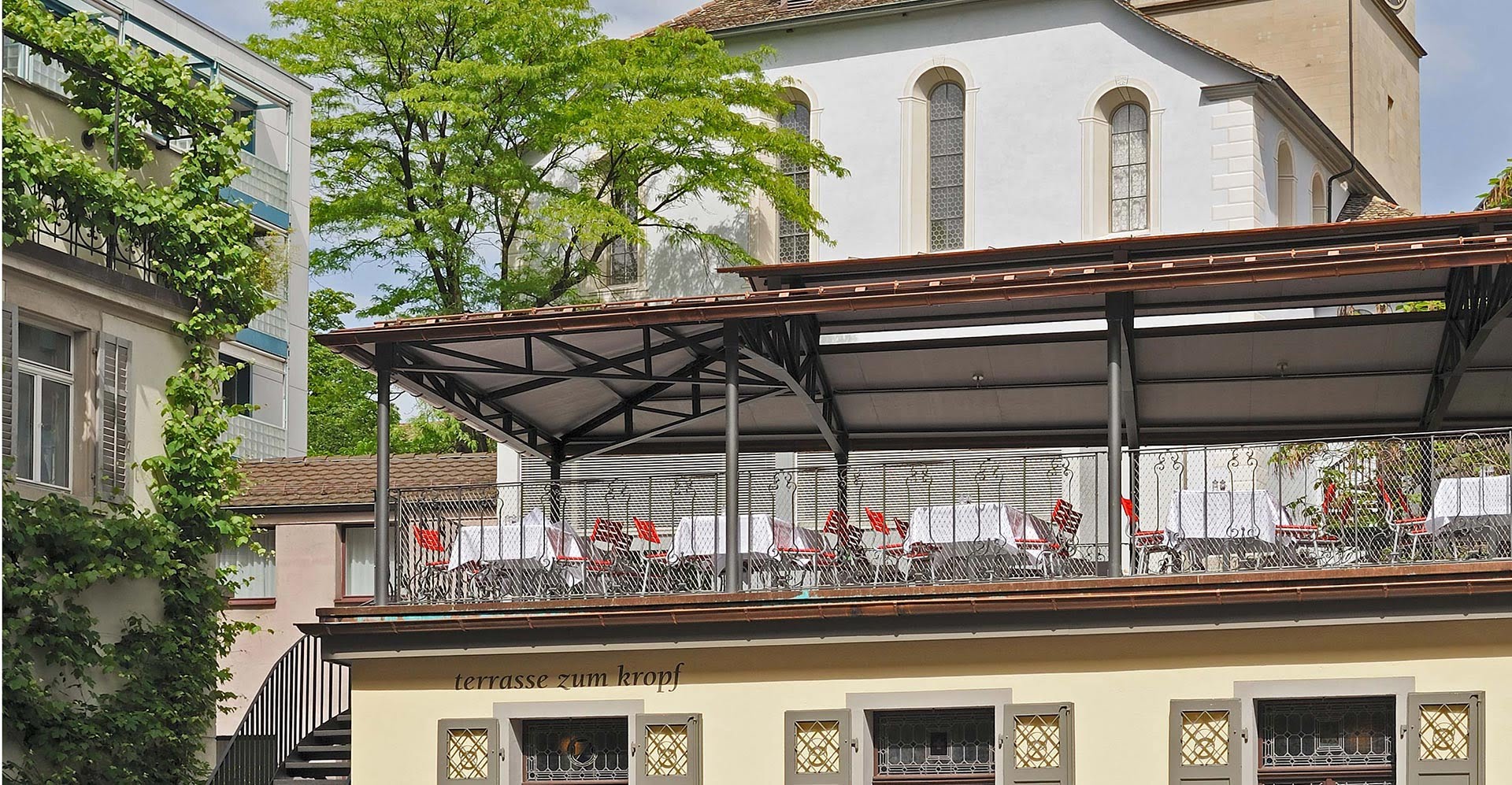
After only eight months of reconstruction, father and son Huber, who had previously run the Zunfthaus zur Schmiden, took over management of the restaurant in 1984. They continued the successful reliance on traditional, home-style cooking. Oscar Huber, who still runs the business today, experienced the most recent refurbishment of the property in 2007/08. In the context of the upgrade, the atmosphere of the rear hall was rejuvenated. In addition, the buffet, kitchen, and all other operational spaces, as well as the terrace were entirely rebuilt. Now, Restaurant zum Kropf is once again a cheerful, airy garden inn in the summer season.

Despite the many changes in owners and innkeepers, renovations and rebuilding; of Zurich’s many beer and wine restaurants built in the 1880s and 1890s, Restaurant zum Kropf is the only one to have preserved its original decor practically unchanged. With this, it is an important and living witness to the cultural history of a past epoch.